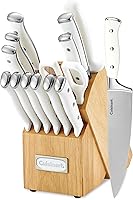
6 Best Knife Sets Under $200 (October 2026)
The best knife sets under 200 dollars include the Cuisinart 15-Piece Forged Triple Rivet Set for everyday family cooking, the Henckels Statement 15-Piece Block Set for bread lovers, and the imarku Japanese Block Set With Gyutou for busy home cooks.
On this page (7 sections)
- Which best knife set under 200 fits your cooking?
- How should you choose a knife set under 200 dollars?
- Should you choose a built-in sharpener or a honing steel?
- How much room should you allow for the block?
- How should you set up and care for a new knife set?
- What mistakes should you avoid when choosing and using a set?
- Which knife set under 200 should you choose?
The Cuisinart 15-Piece Forged Triple Rivet Set is our choice for the best knife set under 200 dollars for everyday family cooking. Choose Henckels Statement if you cut bread often, or the first imarku set if you want a sharpener built into the block.
Start with the meals you make, rather than the number on the box. A bread knife can matter more than a second vegetable knife, and steak knives earn their space only if your household uses them.
Our picks at a glance
-
1
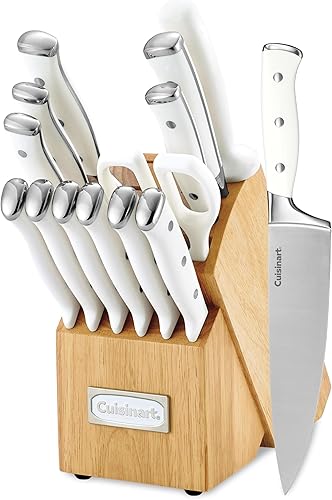 Best for everyday family cooking
Cuisinart 15-Piece Forged Triple Rivet Set
9.1/10 our score
See it on Amazon -
2

-
3

- 4
 Check it
McCook 15-Piece Block Set With Sharpener
Best for frequent shear users - 5
 Check it
imarku 14-Piece Gyutou Block Set
Best for shared prep spaces - 6
 Best for pinch-grip cooksCheck it
Which best knife set under 200 fits your cooking?
Cuisinart is the strongest starting point for general home cooking, while the other picks solve more specific needs. Bread cutting, frequent shear use, handle shape and your preferred sharpening routine should decide any move away from that first choice.
We compared blade construction, useful knife types, storage and upkeep. The main trade-offs are below, followed by who should buy each set and who should skip it.
| Product | Best for | Construction | Key knives | Storage and upkeep | Our score |
|---|---|---|---|---|---|
| Cuisinart 15-Piece Forged Triple Rivet Set | everyday family cooking | Forged; full tang | Chef, slicing, santoku, utility, straight paring and bird's beak paring | Wooden block; separate honing steel | 9.1 |
| Henckels Statement 15-Piece Block Set | bread lovers | Precision-stamped; full tang | Chef, bread, serrated utility, paring and santoku | Hardwood block; separate honing steel | 8.9 |
| imarku Japanese Block Set With Gyutou | busy home cooks | Forged; full tang | Chef, bread, slicing, santoku, utility and paring | Hardwood block with built-in pull-through sharpener | 8.7 |
| McCook 15-Piece Block Set With Sharpener | frequent shear users | Forged; full tang | Chef, slicing, santoku, serrated utility, fine-edge utility and paring | Wooden block with built-in sharpener; hand wash only | 8.6 |
| imarku 14-Piece Gyutou Block Set | shared prep spaces | Forged; full tang | Chef, bread, slicing, santoku, utility and paring | Solid wood block with ventilation slot and built-in sharpener | 8.3 |
| Yatoshi 15-Piece Block Set | pinch-grip cooks | Stamped; hidden full-length tang | Chef, bread, slicing, utility, paring and two santoku sizes | Acacia block with deep slots; plan a separate sharpening method | 7.8 |
Cuisinart 15-Piece Forged Triple Rivet Set
- Forged high-carbon stainless steel blades
- Full-tang construction
- Extra-wide safety bolster
- Honing steel
- White finish
Choose Cuisinart for family meal prep, table knives and a separate honing tool in one block. Its two paring shapes suit cooks who also peel and trim produce.
Pros
- Six steak knives and household shears
- Straight and curved paring knives
- Cuisinart lifetime defect warranty for the original purchaser under normal home use
Cons
- No dedicated bread knife
- Bird's beak knife adds little if you rarely peel by hand
Buy Cuisinart for a traditional family kitchen where the same block serves dinner prep and the table. Its chef's knife handles board work, while the slicing knife gives you a longer blade for portioning cooked roasts.
The distinctive extra is the bird's beak paring knife, with a curved blade suited to peeling rounded produce and trimming small blemishes. It earns its slot if you work with potatoes or apples by hand; otherwise, you'll likely favor the straight paring knife.
An extra-wide bolster creates a clear transition between blade and handle. That shape deserves attention if you like holding a knife near the blade, since grip comfort matters more than the word “forged.”
Skip this set if crusty loaves are part of your daily routine and you want every main knife in one block. Its slicing knife has a fine edge, so it doesn't fill the same role as a serrated bread knife.
The included steel supports routine honing, but plan for sharpening when honing stops helping. Our Cuisinart 15-piece set review covers the set's strengths and compromises in more detail.
Henckels Statement 15-Piece Block Set
- Single-piece precision-stamped blades
- Full-tang construction
- Bread and serrated utility knives
- Honing steel
- Dishwasher safe
Henckels Statement suits households that cut bread, rolls and sandwiches alongside regular dinner prep. Its stamped blades offer an alternative to the forged picks.
Pros
- Dedicated bread knife
- Six steak knives and kitchen shears
- Henckels permits dishwasher or hand washing
Cons
- Santoku counts differ across Henckels descriptions
- Separate sharpening method needed when honing no longer restores cutting
Choose Henckels Statement for bread, sandwiches and regular meal prep. A dedicated bread knife handles larger loaves, while the shorter serrated utility knife is useful for rolls and foods with firm skins and soft centers.
That distinction matters if you currently use a chef's knife for everything. A gentle sawing motion lets a serrated blade enter a crust without pressing down hard enough to flatten the softer bread beneath it.
Statement uses single-piece stamped blades, which Henckels describes as lighter than forged knives. Consider it if you prefer a less weighty blade, while remembering that the full block's weight says little about how an individual knife feels.
Henckels gives conflicting accounts of whether both santoku sizes are included, so confirm the exact contents before ordering if that extra knife drives your choice. The bread knife is the clearer reason to select this set.
Skip Statement if your main goal is a sharpener built into storage. It includes a honing steel instead; our Henckels Statement set review explains its place among everyday block sets.
imarku Japanese Block Set With Gyutou
- Forged high-carbon stainless steel
- 10–15° edge
- Built-in pull-through sharpener
- Contoured handles with non-slip grooves
- Bread and slicing knives
This imarku set puts a pull-through sharpener beside a broad selection of prep knives. It suits cooks who want edge upkeep close at hand.
Pros
- Integrated sharpener for compatible blades
- Six serrated steak knives and shears
- Includes a dedicated bread knife
Cons
- Hand washing recommended to preserve sharpness
- Sharpener compatibility needs attention with serrated blades
Pick this imarku set if convenient edge upkeep will help you maintain your knives. Its pull-through sharpener sits in the block, so you don't need to find a separate tool for a compatible blade's touch-up.
The knife selection also covers two jobs that buyers can overlook: cutting bread and slicing cooked meat. That makes it a better fit than a prep-focused assortment if you want one block for weekday meals and occasional hosting.
The contoured handles have non-slip grooves. Those are worth considering if smooth handles don't appeal to you, but always dry your hands and clear grease from the handle before cutting.
Imarku describes a 10–15° edge, yet that number shouldn't push you toward rougher tasks. Use these kitchen knives for food prep, rather than twisting through bones, prying apart frozen ingredients or opening packaging.
Skip this set if you already prefer a sharpening stone or guided system and want fewer tools on the counter. For alternative storage arrangements and knife selections, compare our best knife block sets.
McCook 15-Piece Block Set With Sharpener
- Forged high-carbon stainless steel blades
- Built-in sharpener
- Two pairs of kitchen shears
- Fine-edge and serrated utility knives
- Hand wash only
McCook suits cooks who often reach for kitchen shears and want a second pair available. Its prep selection favors utility knives over a dedicated bread knife.
Pros
- Two pairs of shears
- Built-in sharpener
- Six serrated steak knives
Cons
- Not dishwasher safe
- No dedicated bread knife
McCook makes sense for cooks who use kitchen shears throughout meal prep. Two pairs let you keep one available while the other waits for cleaning, which is useful when preparing several parts of dinner.
Assigning one pair to raw protein can simplify your routine, but it doesn't replace washing. Clean each tool after contact with raw food, and keep it away from ready-to-eat ingredients until it's clean.
This set also separates serrated and fine-edge utility tasks. Use the serrated utility knife with a sawing motion on suitable foods; reach for the fine-edge version when you want a small, straight cutting blade.
The compromise is bread cutting. A short utility blade is less practical for a broad loaf than a dedicated bread knife, so frequent bakers should favor another set here.
Skip McCook if dishwasher cleanup is a firm requirement, because this set is hand wash only. If you're weighing a traditional block with a honing steel instead, our Cuisinart versus Henckels guide explains those alternatives.
imarku 14-Piece Gyutou Block Set
- Full-tang construction
- 15° edge per side
- Built-in sharpener
- Bottom ventilation slot in block
- Textured steel handles
A ventilated block and textured handles make this an option for a kitchen where several people prep meals. The storage still requires clean, fully dry knives.
Pros
- Ventilation slot at the block's base
- Built-in sharpener
- Imarku one-year warranty
Cons
- Six steak knives add storage demand if rarely used
- Ventilation does not replace drying before storage
Choose this imarku version when organized storage is a priority in a shared kitchen. The block combines a built-in sharpener with a ventilation slot at its base, while the handles have a striped texture.
The vent provides an airflow path, but it isn't a reason to store wet knives. Every cook using the block should follow the same wash, dry and return routine so moisture doesn't collect out of sight.
Its selection includes the main board-work blades plus separate bread and slicing knives. That lets different household members choose a shape that suits the task without using a small paring knife for a large cutting job.
Imarku specifies a 15° edge per side for this version. Don't treat that as a direct performance comparison with an edge angle described without the same per-side wording.
Skip it if you rarely use table knives or already have storage you like. Choose it over the first imarku only when the block design and handle texture appeal more; the prep-knife roles overlap closely.
Yatoshi 15-Piece Block Set
- 7Cr17 high-carbon stainless steel
- Pakkawood handles
- Sloped bolster
- Acacia block with rubber base
- Pull-apart kitchen shears
Yatoshi suits cooks who prefer contoured wood handles and a sloped bolster for a pinch grip. Two santoku sizes add choice for board work.
Pros
- 5-inch and 7-inch santoku knives
- Pull-apart shears for easier cleaning access
- Deep block slots and non-slip rubber base
Cons
- Two santoku knives overlap in purpose
- No clearly described built-in sharpening system
Yatoshi suits cooks who prefer a pinch grip and contoured wood handles. Its sloped bolster leaves access near the heel, where a cook can pinch the blade between thumb and forefinger while wrapping the remaining fingers around the handle.
The two santoku sizes give you a choice for board work. A shorter blade can suit small ingredients, while the longer one gives more cutting length for wider produce.
That extra choice is useful only if you'll reach for both. Skip this set if you want to reduce duplicate knife roles, since a chef's knife and two santoku knives cover some of the same jobs.
The pull-apart shears offer access to surfaces around the joint during cleaning. Reassemble them as directed and check that they're secure before use.
The acacia block has deep slots and a rubber base, but it still needs a level, dry place on the counter. Choose Yatoshi for its grip shape and wood finish, and plan a sharpening method rather than assuming the block handles maintenance.
How should you choose a knife set under 200 dollars?
Match the knives to a normal week of cooking before comparing piece counts. Write down what you cut most often, then check whether the set covers those jobs without relying on a blade that's too short or the wrong shape.
What makes the best knife set under 200 useful?
A useful set starts with a chef's knife you can control and a small paring knife. A bread knife becomes a priority if you cut crusty loaves, while a utility knife fills the gap between large board work and small trimming.
Think through a typical dinner: chop an onion, trim a pepper, cut bread and portion cooked meat. Those tasks reveal more about your needs than a large assortment of similar blade shapes.
Santoku knives can serve many of the same vegetable-prep jobs as a chef's knife. Having both gives you a choice, but having two santoku sizes isn't essential for a complete kitchen.
Our guide to choosing a knife block set explains how to weigh the core knives against extra pieces.
Count useful tools, not just pieces
Piece totals include more than cooking knives, often counting the block, shears and maintenance tools. Six steak knives also take up much of a large set, even though they don't expand your meal-prep options.
Keep the steak knives if you regularly set a table for several people. If you mostly cook for yourself and already own table cutlery, give more weight to the main prep knives.
The same rule applies to specialty shapes. A curved paring knife helps with peeling, but it won't compensate for a missing bread knife in a household that slices loaves every morning.
Choose construction for handling, not prestige
Forged and stamped describe how blades are made, rather than how comfortably you'll use them. A fuller bolster, handle contour and blade length can have more effect on your grip than the construction label.
Full tang means the blade extends through the handle. It doesn't mean the blade is forged, and it doesn't tell you whether the balance will suit your hand.
If you tend to grip tightly, think about where your fingers will sit and whether the handle shape encourages a relaxed hold. Don't choose a heavier style simply because it sounds more substantial.
Our forged vs stamped knives guide explains the terms without treating either method as a shortcut to quality.
Treat steel names and edge angles as context
An acute edge still needs careful use and upkeep. A stated angle doesn't establish how long a knife will stay sharp, and high-carbon stainless steel still needs cleaning and drying.
Don't compare edge numbers unless they're expressed the same way. An angle stated per side is different from a total included angle, so a smaller number alone isn't a reason to choose one set.
For daily cooking, a maintained edge and a suitable cutting board matter more than chasing the narrowest angle. Avoid glass, stone and ceramic cutting surfaces, which are hard on knife edges.
Should you choose a built-in sharpener or a honing steel?
Choose the maintenance method you'll use correctly and consistently. A block sharpener keeps a tool close by, while a separate honing steel gives you a routine for realigning a suitable edge between sharpening sessions.
Honing mainly straightens an edge that has rolled out of line. Sharpening removes metal to form a new edge, so a steel won't restore every dull knife.
Use a block sharpener only as directed
Follow the set's instructions for blade compatibility, direction and pressure. Don't run serrated steak or bread knives through a sharpener unless the instructions expressly allow it.
A pull-through slot also isn't permission to sharpen every time you take a knife out. Unnecessary passes remove material, so base maintenance on cutting performance and the brand's guidance.
These blocks require deliberate use of the sharpener. Read how self-sharpening knife blocks work if you're comparing them with blocks designed to maintain certain blades during removal or return.
Build a simple upkeep routine
Wash and dry the knife after use, then notice how it behaves during ordinary prep. If a clean blade slips on tomato skin or needs more pressure than usual, its edge needs attention.
Use the recommended honing method where appropriate, and arrange sharpening when that no longer restores useful cutting. A professional service can help if you don't want to manage the sharpening angle yourself.
For the difference between routine care and restoring a worn edge, see how to sharpen knives in a knife block.
How much room should you allow for the block?
Allow space for both the block and the motion of removing its longest knife. A block can fit beneath a cabinet yet be awkward to use if the handle hits the cabinet before the blade clears its slot.
Measure the intended spot and keep the removal path away from cords, jars and appliance handles. You should be able to draw a knife without reaching across a hot cooking surface.
Choose a stable position away from the sink's splash area and the counter edge. A block that must be moved for every meal adds a step to a tool you'll use often.
Use our complete knife block set guide to compare countertop storage with other arrangements. A full block is useful only if it fits where you actually prep food.
How should you set up and care for a new knife set?
Wash and fully dry each knife before its first use, then give every tool a consistent storage place. Read the care and sharpener instructions before using a maintenance slot or putting any piece in the dishwasher.
Set up a stable cutting area
Place a cutting board on a surface where it won't slide. A damp cloth beneath a suitable board can help hold it steady, but keep the knife handle and your gripping hand dry.
Start with the chef's knife for larger board tasks and the paring knife for small trimming. Use a bread knife with a sawing motion instead of forcing a straight blade through a hard crust.
Keep fingertips curled back on the hand holding the food. Cut a flat base on round ingredients when practical so they don't roll beneath the blade.
Clean promptly and dry before storage
Hand washing gives you control over the edge and handle, even where a brand permits dishwasher use. Wash one knife at a time, keep the blade visible and dry it carefully before returning it to the block.
Don't leave knives soaking in a sink where someone could reach into the water. Avoid leaving acidic food or salty residue on the blade after prep.
Wooden blocks need their own care, since crumbs and moisture can collect around slots. Our guide to cleaning a knife block explains how to keep storage clean without soaking the block.
What mistakes should you avoid when choosing and using a set?
Avoid paying for duplicate roles while overlooking a knife you'll use every day. A second vegetable blade is a poor trade if you still need to find a suitable knife for bread.
- Don't confuse a slicing knife with a bread knife. A long fine-edge blade suits clean slices of cooked meat, while serrations help work through crust.
- Don't assume a sharpener suits every blade. Serrated knives and shears may require a different care method.
- Don't use a knife as a pry bar. Twisting, opening cans and separating frozen food can damage an edge or cause a slip.
- Don't scrape with the cutting edge. Turn the knife over to move chopped food with the spine, or use a bench scraper.
- Don't treat a textured grip as permission for wet handling. Clean, dry hands and a steady board remain part of safe prep.
Budget fit can change, so keep your cap firm and compare the exact model rather than a similar name. A set only earns its place if its knife selection, storage and upkeep also fit your kitchen.
Which knife set under 200 should you choose?
Choose Cuisinart if your priority is everyday prep, family table use and a separate honing routine. Choose Henckels Statement instead when bread and sandwiches make a dedicated serrated bread knife more useful than a curved paring knife.
Pick the first imarku set for a broad prep selection with a pull-through sharpener nearby. Choose McCook if you use shears often and can commit to hand washing, or the second imarku if its ventilated block and textured handles suit your shared kitchen.
Choose Yatoshi for its sloped bolster and wood handles when grip shape matters more to you than integrated sharpening. Skip any set whose extra knives would mostly stay in their slots.
The best knife set under 200 dollars is the one that covers your regular meals and fits a care routine you'll keep. If you're still deciding which blade shapes deserve space, start with our guide to the knives you actually need in a set.
Our top 3 picks at a glance
-
1
Best for everyday family cooking
Cuisinart 15-Piece Forged Triple Rivet Set
9.1/10 our score
See it on Amazon -
2
-
3
Frequently asked questions
What is the best knife set under 200 dollars?
The Cuisinart 15-Piece Forged Triple Rivet Set is our first choice for everyday family cooking. It covers meal prep and table use, with a separate honing steel for routine care.
Choose Henckels Statement instead if a dedicated bread knife matters more than Cuisinart's curved paring knife.
Is a forged knife set better than a stamped set?
Forged knives are not automatically better than stamped knives. Blade shape, handle fit, edge upkeep and the knives you actually use matter more than construction alone.
Choose a set that feels manageable and covers your meals, rather than paying attention only to how its blades were formed.
Do I need a knife set with a built-in sharpener?
You don't need a built-in sharpener if you already have a suitable sharpening routine. It can make upkeep easier to remember, but you still need to follow the brand's instructions.
A honing steel mainly realigns an edge, while sharpening removes metal to create a fresh cutting edge.
Which knives should a set include?
Start with a chef's knife and a paring knife, then add a bread knife if you cut loaves or rolls. A utility knife helps with smaller jobs, while a santoku can overlap with a chef's knife.
Our guide to the knives you need in a set explains which pieces earn their space.
Are large knife block sets worth the counter space?
A large block set is worthwhile when you use both its prep knives and its table knives. If most slots hold pieces you rarely touch, a smaller collection makes more sense.
Measure the space above the block as well as its footprint; our knife block set buying guide explains storage choices.