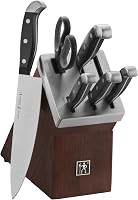
Do Self-Sharpening Knife Blocks Work?
Yes, self-sharpening knife blocks work for routine edge maintenance on compatible knives. Their built-in wheels contact blades during storage or removal, but a very dull or damaged edge may need separate sharpening.
On this page (8 sections)
- How do self-sharpening knife blocks work?
- Can a self-sharpening block restore a dull knife?
- Do the knives need to match the block?
- How should you choose a self-sharpening set?
- How do you set up and care for the block?
- How often should you use the sharpening slots?
- Which mistakes make self-sharpening blocks less useful?
- Should you buy a self-sharpening knife block?
Yes, self-sharpening knife blocks work for routine edge maintenance on compatible knives. Their built-in wheels contact blades as you remove or return them, helping make upkeep part of your cooking routine.
The benefit is convenience, not a permanently sharp edge. Choose one for a matching set you'll use often, rather than as a repair tool for neglected knives.
The key distinction is fit versus compatibility: a knife can fit inside a slot without having the right blade shape or edge for its sharpening system.
How do self-sharpening knife blocks work?
A self-sharpening block guides compatible blades past built-in sharpening wheels during insertion, removal, or both. The block controls the contact, so you don't have to set a sharpening angle by hand.
The Henckels Statement and Dynamic sets use ceramic honing wheels, while Calphalon calls its ceramic system SharpIN. Follow each block's directions for the correct motion.
“Honing” often means straightening an edge, but ceramic tools can also remove metal. Don't assume every system works like a smooth honing steel simply because its description uses that word.
These blocks trade adjustment for ease. You get a preset system for matching knives, with less control than a separate tool that lets you choose the angle and abrasive.
When do self-sharpening knife blocks work best?
They work best as regular upkeep for an edge that's already in usable shape. Returning a clean knife to its proper slot makes maintenance easier to remember.
They suit cooks who want fewer separate care steps. Someone who already sharpens carefully may gain little from moving that job into a storage block.
Can a self-sharpening block restore a dull knife?
A block may maintain a usable edge, but a very dull or damaged blade needs different care. Chips, a bent tip, or an edge that still struggles after normal use of the block call for closer inspection.
Judge the edge during ordinary food prep. A knife that slips on tomato skin or needs heavy pressure through an onion isn't cutting well enough, regardless of its storage system.
Don't keep pulling it through the block in hopes that more passes will solve the problem. Extra abrasion can remove metal without addressing the reason it cuts poorly.
For the next step, see how to sharpen knives in a knife block. Match any separate sharpener or professional service to the knife's care instructions.
Do the knives need to match the block?
Yes, use knives approved for that block, with each blade in its assigned slot. Blade thickness, shape, and edge angle affect how the edge meets the wheels.
A self-sharpening block isn't flexible storage for an expanding collection. If you often buy individual knives from different brands, ordinary storage plus a suitable separate sharpener offers more freedom.
The Henckels Statement 7-Piece Self-Sharpening Block is tailored to Statement knives. Its selection includes a paring knife, serrated utility knife, utility knife, Santoku, chef's knife, kitchen shears, and block.
That makes it a sensible choice for a cook who wants a focused prep set without table knives. Skip it if a dedicated bread knife or steak knives are essential to your replacement set.
The Henckels Solution 16-Piece Self-Sharpening Block suits someone replacing an existing collection who wants a larger matching set. It has stainless steel blades, and Henckels says its block sharpens knives as they're removed.
Choose it because its knife selection fits your cooking, rather than because 16 pieces sounds more complete. Skip it if you only need a few prep knives or want storage for knives you already own.
Does the block sharpen every included blade?
Don't assume every slot sharpens. A set can include serrated knives, steak knives, and shears without providing sharpening for each one.
Read the slot guide before the first use. A serrated edge needs care suited to its teeth, so never put a bread knife into a chef's knife slot to reach the wheels.
How should you choose a self-sharpening set?
Choose by knife selection, compatibility, and counter clearance, in that order. The sharpening feature only helps if the knives suit the food you prepare.
Start with the tasks you repeat each week. A chef's knife handles much everyday chopping, a paring knife suits small trimming jobs, and a serrated bread knife serves a different purpose from either.
Count useful blades rather than total pieces. Blocks and shears contribute to set counts, while extra steak knives add table service rather than new prep tasks.
Our knife block sets buying guide explains how to compare complete sets. If you're deciding which blades matter, read what knives you need in a knife set before choosing a larger bundle.
The Calphalon 13-Piece Self-Sharpening Block suits cooks who want labeled handles and a set that covers prep and table use. It includes a chef's knife, slicer, Santoku, bread knife, paring knife, 6 steak knives, shears, and block.
Calphalon says the nonstick coating and longitudinal ridge help food release from the blades. Skip this set if you prefer uncoated knives or don't need the steak knives.
Measure the intended counter space and leave room above the block to withdraw the longest knife. A block that fits beneath a cabinet while closed may still be awkward to use there.
Also consider where you prep food and wash knives. A stable spot within easy reach makes correct storage more practical than a crowded corner beside a sink.
How do you set up and care for the block?
Start with clean, fully dry knives in their assigned slots, and place the block on a stable, dry counter. Read its instructions before inserting the blades for the first time.
Wash new knives as directed, then dry the blades and handles. Check slot markings so each knife enters the position intended for it.
Guide blades smoothly along the slot's path. Don't twist, force, or deliberately press an edge harder against the sharpening parts.
Hand washing gives you a chance to inspect each blade and dry it promptly. Even when a knife allows dishwasher cleaning, don't return it to the block wet.
Keep the block away from sink splashes and avoid soaking it. Follow its cleaning directions rather than trying to rinse debris through the sharpening mechanism.
Learn how to clean a knife block before food debris or moisture builds up inside. A built-in sharpener maintains an edge; it doesn't clean the storage space.
Use wood or suitable plastic cutting boards to reduce unnecessary edge wear. Avoid glass cutting surfaces, cutting frozen food with a general prep knife, and using a blade to pry things open.
How often should you use the sharpening slots?
Use them as directed during normal storage and removal, without adding a fixed daily sharpening session. The right routine follows the block's design, rather than a target number of passes.
If cutting gets worse, check the blade and your cutting surface before changing the routine. A damaged edge or unsuitable board won't be solved by repeatedly returning the knife to its slot.
The Henckels Dynamic 20-Piece Self-Sharpening Block suits households that want a broad prep selection and table knives together. It includes boning and carving knives, a bread knife, 8 steak knives, and kitchen shears.
Choose it if those extra roles match meals you actually make. Skip it if you rarely carve meat or serve steak, since a smaller selection may cover your cooking with fewer unused blades.
Remember that more included knives don't mean more blades receive automatic sharpening. Keep following the slot guide, including for the less frequently used pieces.
Which mistakes make self-sharpening blocks less useful?
The main mistakes are using the wrong slots, storing wet knives, and expecting the wheels to repair damage. Each undermines the convenience you're buying.
Don't use spare slots for unrelated knives without confirmed compatibility. A blade sliding in easily doesn't prove its edge meets the sharpening parts correctly.
Avoid repeated extra passes just because sharpening feels effortless. Use the prescribed motion and assess cutting performance during food prep.
Don't choose by piece count alone, either. A set with several blades you won't use can be a poorer fit than one that covers your daily work with fewer knives.
Should you buy a self-sharpening knife block?
Self-sharpening knife blocks work best for cooks buying a matching set with convenient routine upkeep. Pick Statement for a focused prep selection, Solution for a larger matching bundle, Calphalon for labeled handles and coated blades, or Dynamic for broader prep and table coverage.
Keep your current storage if you like your mixed knife collection or want direct control over sharpening. A block's convenience isn't a reason to replace knives that already suit you.
For a final comparison, see the best self-sharpening knife block sets and how to choose a knife block set. Buy for the blades and storage space you need, then use the sharpening system as part of their care.
Frequently asked questions
Do self-sharpening knife blocks really sharpen knives?
Yes, self-sharpening knife blocks can maintain compatible edges through contact with built-in wheels during storage or removal. Results depend on correct blade fit and proper use.
Treat the block as routine upkeep, and arrange separate sharpening if a knife remains dull or has a damaged edge.
Can any knife go in a self-sharpening block?
No, a knife must match the block's intended blade shape and sharpening system, not merely fit inside a slot. Use each included knife in its assigned position.
Check the manufacturer's compatibility guidance before adding another knife, especially a serrated blade or one with a different edge design.
Do self-sharpening blocks replace a knife sharpener?
A self-sharpening block can cover routine maintenance, but it doesn't replace every sharpening tool or service. If a compatible knife still slips on tomato skin or crushes food with normal cutting pressure, stop adding passes.
Check for damage and follow the knife brand's guidance for suitable sharpening.
Are self-sharpening knife blocks worth it?
They're worth considering when you need a matching knife set and want edge upkeep built into storage. Choose the knife selection and counter fit first.
Skip this format if you're keeping a mixed collection, prefer control over sharpening angles, or already maintain your knives with a method you like.