What Knives Do You Need in a Knife Set?
For most home cooks, the answer to what knives you need in a knife set is a chef’s knife, a paring knife, and a serrated bread knife. Add specialty blades only for jobs you do often.
On this page (9 sections)
- What knives do you need in a knife set?
- What does each common knife do?
- Is a utility knife different from a chef’s knife?
- Do you need carving, boning, or steak knives?
- How many knives do you actually need?
- How do you choose the right chef’s knife?
- How should you set up and care for a small knife set?
- What mistakes lead to buying the wrong knife set?
- Which knives should you buy first?
Most home cooks need a chef’s knife, a paring knife, and a serrated bread knife in a knife set. These handle everyday prep; extra blades should earn their place through meals you actually cook.
To decide what knives you need in a knife set, write down your usual cutting jobs before comparing piece counts. A compact collection can cover them without filling your counter with unused slots.
You can buy the core knives separately or choose a knife block set that includes them. The useful choice is the one that fills gaps in your kitchen.
What knives do you need in a knife set?
Start with 3 different cutting roles: a broad blade for board work, a small blade for close work, and a serrated blade for bread. Each solves a problem the others handle less comfortably.
Which knives does a basic kitchen set need?
A chef’s knife handles onions, herbs, vegetables, and boneless meat. An 8-inch blade is a common starting point, though control matters more than choosing a particular length.
A paring knife suits peeling, removing blemishes, and trimming small fruit. For small food held in your hand, work slowly and keep the blade’s path clear of your fingers.
A serrated bread knife cuts through crust while limiting pressure on the soft center. Use a gentle sawing motion instead of pushing straight down.
The Victorinox Fibrox Pro is a practical starting point for a collection built around everyday chopping. Its stainless steel blade and ergonomic TPE handle suit cooks who want a straightforward work knife.
Choose the Victorinox for a grip-focused design: Victorinox describes the handle as non-slip, including when wet. Still, keep your hands and handle dry whenever possible.
Skip it if you specifically want forged construction and a traditional riveted handle; this knife is stamped. It also fills only the chef’s-knife role, so leave room for the other core blades.
What does each common knife do?
Match each extra knife to a recurring task. A new blade should solve a specific difficulty rather than repeat work your chef’s knife already handles.
| Knife or tool | Main job | When it earns space |
|---|---|---|
| Utility knife | Smaller slicing jobs | You often find a chef’s knife too large and a paring knife too short |
| Santoku | Chopping and slicing on a board | You prefer its blade shape as your main prep knife |
| Carving knife | Long slices of cooked meat | Roasts or large cooked cuts are regular meals |
| Boning knife | Separating meat from bones | You routinely break down bone-in cuts |
| Steak knives | Cutting food at the table | Your household regularly serves meals that need them |
| Kitchen shears | Snipping herbs and suitable food prep | Scissors suit a job better than a blade on a board |
A santoku can serve as your main prep knife instead of a chef’s knife. Buying both makes sense when you have a clear preference for different jobs or 2 people regularly cook together.
Shears count as useful equipment, but they don’t replace a paring or bread knife. Choose a pair designed for food use and clean around the pivot after messy jobs.
Is a utility knife different from a chef’s knife?
A utility knife generally offers a narrower blade for smaller slicing jobs. It can suit sandwiches, small vegetables, or tasks where a broad chef’s knife feels awkward.
Buy one if you repeatedly wish for a blade between your chef’s knife and paring knife. Skip it if those 2 already handle your small prep comfortably.
If your main concern is maintaining your everyday blade, focus on that knife’s design first. The Mercer Renaissance has a shortened bolster that leaves the full cutting edge accessible for sharpening.
Choose the Mercer if you want forged construction with full-edge sharpening access. Its full tang and triple-riveted Delrin handle suit buyers who prefer that traditional handle layout.
Skip it if you want another cutting role or specifically prefer a flexible, textured grip material. It’s an alternative to the Victorinox, rather than a necessary addition beside it.
Construction alone doesn’t settle comfort or suitability. Our guide to forged vs. stamped knives explains the differences to weigh alongside blade shape and handle fit.
Do you need carving, boning, or steak knives?
Buy these for regular meat preparation or table use, rather than treating them as required parts of every starter set. They serve different stages of a meal.
A carving knife helps make long slices through cooked roasts. For an occasional small roast, a sharp chef’s knife may already do the job.
A boning knife helps follow bones and work around joints. Don’t use it to chop through bone or force it through frozen food.
Steak knives belong with your place settings, so choose their number around the people you serve. A set with 6 steak knives hasn’t given you 6 extra tools for preparing dinner.
How many knives do you actually need?
Start with 3 core knives and expand only where a task remains uncovered. A frequent roast cook may add a carving knife, while someone who buys boneless portions may never need a boning knife.
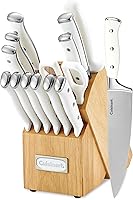
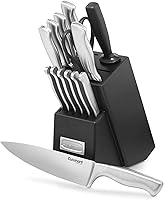
Before buying a boxed set, separate its contents into prep knives, table knives, and accessories. Blocks, shears, and honing rods can all contribute to the advertised piece count.
Check for duplication with what you own. Replacing one uncomfortable chef’s knife may be more useful than buying a block that repeats your good bread and paring knives.
Measure the storage area, including the space needed to pull knives out beneath cabinets. Our complete knife block set guide helps you assess the block and its contents together.
How do you choose the right chef’s knife?
Choose for control, clearance, and a grip that suits your hand. A knife should let you hold it securely without squeezing hard or bending your wrist awkwardly.
For board work, check that your knuckles have room beneath the handle. A shorter blade can be easier in a cramped workspace, while a longer one needs enough board space for its full cutting path.
The Wusthof Classic has a forged high-carbon stainless steel blade, a full tang, and a triple-riveted synthetic handle. Its full bolster and finger guard are worth comparing with the Mercer’s shortened bolster.
Choose the Wusthof if you prefer a traditional forged design with a full bolster. It suits someone choosing their main knife around that handle and guard layout.
Skip it if easy sharpening access along the entire edge is your priority. A full bolster needs attention during sharpening so the heel doesn’t eventually prevent the edge from meeting the board.
Treat these 3 chef’s knives as alternatives. Choose the handle and construction you prefer, then spend your remaining attention on the other cutting roles.
How should you set up and care for a small knife set?
Give your knives a stable cutting surface, protected storage, and a simple cleaning routine. These habits matter more than adding extra blades.
Use a wood or suitable plastic cutting board on a stable surface. Avoid glass and stone boards, which are hard on cutting edges.
Keep your guiding fingertips curled away from the blade. Use the knife’s spine or a scraper to move chopped food rather than dragging the cutting edge sideways across the board.
Wash knives promptly, dry them fully, and store them with their edges covered. Even though the Victorinox uses dishwasher-safe materials, hand washing avoids contact with other utensils during a wash cycle.
Never leave a knife hidden in a sink of water. For brand-specific guidance, see Victorinox’s knife care page.
A drawer insert, blade guards, or a suitable block can protect edges from loose utensils. Put only clean, dry knives into a block, and follow our guide to cleaning a knife block when crumbs or residue collect.
Honing and sharpening do different jobs: honing can realign an edge, while sharpening removes metal to form a new one. Follow the blade maker’s guidance and use our knife sharpening guide to plan maintenance.
What mistakes lead to buying the wrong knife set?
The main mistake is counting pieces before checking jobs. A large collection can still lack the blade you need most.
- Buying overlapping prep knives: Start with one main chef’s knife or santoku, then add another only for a clear reason.
- Choosing by construction alone: Forged or stamped describes how a knife is made, not how comfortably you’ll control it.
- Treating every blade as a heavy-duty tool: Don’t pry open containers, twist a stuck blade, or use a general prep knife to split bones.
- Adding knives to solve a dull-edge problem: Maintain a suitable knife before replacing it with several more.
Avoid buying around a distant cooking ambition, too. Add a specialist when the task becomes part of your routine.
Which knives should you buy first?
If you’re deciding what knives you need in a knife set, buy the missing cutting roles first. Keep any suitable knives you already have.
Choose the Victorinox for its TPE grip design, the Mercer for forged construction with a shortened bolster, or the Wusthof for a traditional full-bolster layout. You need only one of these as your main prep knife.
Add a paring knife and serrated bread knife, then stop until a repeated task calls for something else. Use how to choose a knife set to compare a ready-made block with building that collection piece by piece.
Frequently asked questions
What knives should a basic knife set include?
A basic knife set should include a chef’s knife, a paring knife, and a serrated bread knife. These cover most chopping, small trimming jobs, and bread slicing, so choose those first and add a specialty blade only when your meals give it a clear job.
Is a 15-piece knife set necessary?
No, most home cooks don’t need a 15-piece knife set. The count can include a block, shears, a honing rod, and several steak knives, so compare the actual prep knives rather than the total number and check whether they duplicate pieces you already own.
Do you need a boning knife at home?
You need a boning knife only if you often separate meat or poultry from bones. Its narrow blade helps you work around joints and follow bones, but it isn’t meant to cut through them; cooks who buy boneless portions can usually leave it out.
What is the most important knife in a set?
A chef’s knife is the most important knife for most home cooks because it handles much of the work on a cutting board. Choose a size and handle you can control comfortably, then use a paring knife for small work and a serrated knife for bread.