Henckels vs McCook Knives: Which Is Better? (October 2026)
In this Henckels vs McCook knives comparison, choose Henckels for bread slicing and flexible cleanup. Choose McCook for a slicing knife and built-in sharpener if you'll hand wash.
On this page (9 sections)
- Henckels vs McCook knives: what is the main difference?
- How do the blades and handles affect the choice?
- Which sharpening setup will you actually use?
- How much cleanup does each set require?
- Who should buy Henckels, and who should skip it?
- Who should buy McCook, and who should skip it?
- What should you check before placing the block?
- Which everyday mistakes shorten a knife set's useful life?
- Henckels vs McCook knives: which should you choose?
Choose Henckels for bread slicing and flexible cleanup, or McCook for a dedicated slicing knife and a built-in sharpener. The useful answer to Henckels vs McCook knives depends on your meals and care habits, not the shared 15-piece label.
Both sets cover everyday chopping and small prep jobs, with 6 steak knives, kitchen shears and a storage block. The differences matter most when you cut a loaf, carve dinner or maintain an edge.
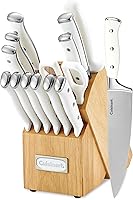
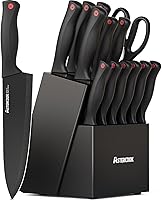
This comparison covers the Henckels Statement and McCook sets shown below. For help deciding whether a full block belongs in your kitchen, start with our knife block set buying guide.


Henckels vs McCook knives: what is the main difference?
Henckels favors bread preparation and a separate honing routine; McCook favors meat slicing and an integrated sharpener. Choose the tool mix that fills a gap in your kitchen.
The core prep blades overlap enough that either set can support ordinary family meals. A chef knife handles much of the chopping, a paring knife takes care of small trimming jobs, and utility knives fill the space between them.
The extra pieces deserve closer attention than the total count. Steak knives serve the table, while a block and maintenance tool count toward the set without adding another food-prep blade.
If you already have table knives, their inclusion may add little value. Think about what you'll use during a normal week, then check which pieces would duplicate tools you already like.
Which Henckels vs McCook knife mix fits your meals?
Choose Henckels for frequent loaf slicing and McCook for regular carving. A dedicated knife earns its space when it solves a job you do often.
Henckels includes an 8-inch bread knife and a 7-inch hollow-edge santoku. The bread blade suits sawing through crust without pressing straight down on the soft center, while the santoku offers another option for vegetable prep.
McCook includes an 8-inch slicing knife, a 5-inch santoku, and separate fine-edge and serrated utility knives. The slicing knife gives you a dedicated blade for controlled cuts through cooked boneless meat.
For large vegetables, start with the chef knife rather than forcing a smaller blade through the food. For a sandwich tomato or small roll, a serrated utility knife can be more convenient than reaching for the longest knife.
Neither set becomes more useful simply because you use every piece. Our guide to which knives you need in a set can help you separate everyday tools from occasional extras.
How do the blades and handles affect the choice?
Henckels uses stamped blades; McCook uses forged blades. That describes how they're made, but your grip, cutting motion and care routine matter more than the label alone.
Henckels has single-piece, precision-stamped stainless steel blades with full tangs. Its traditional triple-rivet handles have curved shapes and stainless steel endcaps, and Henckels describes the knives as lightweight.
McCook uses forged, high-carbon stainless steel blades with full-tang construction. McCook specifies a 15-degree edge and a hardness of HRC 57±2, but those figures don't establish how long an edge will last in your kitchen.
Cutting surfaces, sideways twisting and contact with hard objects all affect an edge. A narrow edge angle is no reason to use a kitchen knife on bones, frozen food or packaging.
If you can handle either set before buying, check whether your fingers feel cramped and whether the handle stays secure without squeezing hard. Hold the knife in your normal cutting grip rather than judging it only by its appearance.
Our guide to forged versus stamped knives explains the construction terms in more detail. Avoid paying for a construction label while overlooking a handle shape you dislike.
Should a lighter knife or a forged blade decide it?
Let comfort decide only after the set contents fit your meals. A construction preference won't make up for a missing blade you need every day.
A cook who dislikes a heavy-feeling knife may find Henckels worth considering because of its lightweight design. Still, complete block weights don't tell you how an individual chef knife will balance in your hand.
For either set, look for control rather than heft alone. You should be able to guide the blade without raising your shoulder, bending your wrist sharply or gripping until your hand tires.
Which sharpening setup will you actually use?
Choose Henckels if you'll learn to use a honing steel; choose McCook if keeping a sharpener beside the knives will help you maintain them. Neither approach removes the need for proper technique.
A honing steel generally helps straighten a rolled edge. It doesn't replace sharpening once the edge has worn enough to need fresh metal exposed.
Henckels includes a 9-inch steel, so you have a separate tool to learn and store. Use deliberate strokes as directed rather than copying fast, sweeping movements that offer little control.
McCook places its sharpener in the block for manual pull-through touch-ups. The convenience is access: you don't have to find a separate tool before dealing with an edge that needs attention.
Don't assume returning a knife to its storage slot sharpens it. Use the designated sharpener according to McCook's directions, including any limits on blade type and the number of passes.
Overusing a sharpener can remove more metal than needed. If a knife starts slipping on tomato skin or crushing soft food, pause and address the edge instead of adding more downward force.
Serrated blades need separate attention because their teeth don't suit every edge-care tool. Our guide on self-sharpening knife blocks explains the differences between storage slots, honing features and sharpening tools.
For a fuller maintenance routine, see how to sharpen knives stored in a block. Follow the instructions for your exact knife and tool before working on the edge.
How much cleanup does each set require?
Henckels allows dishwasher cleaning; McCook requires hand washing. That is a practical dividing line for households where several people share kitchen cleanup.
If knives routinely go into your dishwasher, Henckels fits that habit better. Follow its loading instructions so sharp edges don't create an unloading hazard or knock against other utensils.
Hand washing remains a useful choice for either set because you control how each knife is handled and dried. Use mild dish soap and a soft sponge, keeping your fingers away from the edge.
Wash knives separately rather than leaving them under cloudy dishwater. An unseen blade in a sink creates an avoidable cut risk for the next person reaching in.
Dry the blade and handle fully before storage. Stainless steel resists corrosion, but that doesn't make prolonged damp storage a good care habit.
Keep both wooden blocks out of the dishwasher and avoid soaking them. Remove loose debris and follow the block's care directions, using our knife block cleaning guide when the slots need attention.
Who should buy Henckels, and who should skip it?
Henckels is the stronger fit for a household that cuts bread often and wants flexible cleanup. It also suits a cook willing to learn a separate honing routine.
Picture a kitchen where lunch means sandwiches from a full loaf and dinner starts with chopped vegetables. Its bread knife and general prep tools cover those jobs without requiring a separate bread-knife purchase.
The manual steel suits someone who wants direct control over routine edge care. That buyer should also plan how to sharpen the knives when honing no longer restores useful cutting performance.
Skip this set if your main reason for buying a block is having a sharpener built into it. Also reconsider a full set if you already own good prep knives and need only one replacement blade.
Our Henckels Statement set review covers this option in more detail.
Who should buy McCook, and who should skip it?
McCook fits cooks who carve boneless meat and want an accessible sharpening tool. Its hand-wash requirement should suit everyone who will use the knives.
The dedicated slicer makes sense for roast dinners and portioning cooked meat. Use smooth drawing cuts on a stable board, keeping the blade away from bones rather than treating it as a cleaver.
The second pair of shears can also help when several kitchen jobs overlap. Keep a clear cleaning routine so tools used around raw ingredients don't move straight to ready-to-eat food.
Skip McCook if household members are likely to load every utensil into the dishwasher. It is also a less complete match for frequent loaf slicing unless you already have a bread knife you plan to keep.
Our McCook knife set review looks more closely at its contents and care needs.
What should you check before placing the block?
Check working space and withdrawal clearance before choosing a permanent spot. A block must let you remove the longest knife without hitting a cabinet or reaching across a hot appliance.
| Product | Best for | Construction | Maintenance | Care | Our score |
|---|---|---|---|---|---|
| Henckels Statement 15-Piece Block Set | bread lovers | Stamped | Separate honing steel | Dishwasher safe | 8.9 |
| McCook 15-Piece Block Set With Sharpener | roast dinners | Forged | Built-in sharpener | Hand wash only | 8.6 |
Measure the usable counter area rather than assuming a block will fit beside the stove. Leave room for food prep, and keep the block away from splashes and frequent steam.
Under an upper cabinet, check both height and the direction the knives leave the slots. You may need to pull the block forward to remove a blade safely.
Choose a stable location within easy reach of your cutting board. Avoid placing it near the counter edge or where a child can reach the handles.
Before first use, wash and dry the knives according to the brand's directions. Learn which blade belongs in each slot rather than forcing a knife into a space that feels wrong.
In a shared kitchen, explain the maintenance tool and cleaning rules to everyone. A simple routine followed by the whole household is more useful than a careful plan followed by only one cook.
Which everyday mistakes shorten a knife set's useful life?
Hard cutting surfaces, sideways force and damp storage are mistakes worth avoiding. Better habits help protect either set without adding much work to meal prep.
- Cutting on glass or stone: Use a suitable wood or plastic cutting board instead of a plate, countertop or glass board.
- Scraping with the edge: Turn the blade and use the spine to move chopped food, or use a bench scraper.
- Twisting through stubborn food: Reposition the food and choose a suitable tool instead of levering the blade sideways.
- Forcing a dull knife: Stop when cuts need extra pressure and assess the edge before continuing.
- Using one sharpener for every blade: Check compatibility, especially for serrated utility and steak knives.
- Putting wet knives away: Dry them fully so moisture doesn't sit inside the block.
Match blade size to the job as well. A paring knife offers control for small trimming tasks, but it shouldn't replace a chef knife for cutting a large onion or cabbage on a board.
Keep your cutting board steady with a suitable nonslip base. Good edge care won't compensate for food and a board that move while you cut.
Henckels vs McCook knives: which should you choose?
Pick the set that removes a recurring gap in your cooking routine. In this Henckels vs McCook knives comparison, that means weighing bread preparation against dedicated meat slicing, then choosing a care routine you'll follow.
Choose Henckels if full loaves are part of your week, you want dishwasher flexibility, and you're willing to learn the steel. Choose McCook if carving matters more, you'll hand wash, and easy access to a pull-through sharpener appeals to you.
If neither mix matches your needs, keep your useful knives and replace the missing tool first. For another complete-set alternative, compare Henckels and Cuisinart knife sets.
Frequently asked questions
Is McCook or Henckels better for a first knife set?
Henckels is the better first set if you need a bread knife and want flexible cleanup. McCook fits beginners who prefer an integrated sharpener and will hand wash every knife.
Start by learning the chef knife and paring knife rather than trying to use every blade at once.
Does the McCook set include a bread knife?
No, this McCook set does not include a dedicated bread knife. Its serrated utility knife can handle smaller foods with firm skins or crusts, but its shorter blade is less suited to wide loaves.
Choose Henckels if slicing full loaves is a regular kitchen job.
How do the sharpening tools differ?
Henckels includes a separate honing steel, while McCook has a sharpener built into the block. Honing generally helps realign an edge; sharpening removes material to form a fresh edge.
Follow each tool's directions and blade restrictions, and keep serrated knives out of tools that aren't approved for them.
Can you put both knife sets in the dishwasher?
No, Henckels allows dishwasher cleaning for its knives, while McCook is not dishwasher safe. Hand washing gives you more control over contact with other utensils and drying time.
Wash carefully with mild soap, dry each knife fully, and keep both wooden blocks out of the dishwasher.