6 Best Japanese Knife Sets (October 2026)
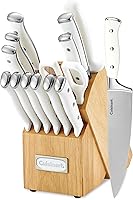
The best Japanese knife sets include the imarku Japanese Block Set With Gyutou for first kitchens, the imarku 14-Piece Gyutou Block Set for shared family kitchens, and the imarku 18-Piece Gyutou Block Set for larger dinner tables.
On this page (7 sections)
- Which Japanese knife sets stand out?
- The best Japanese knife sets for different kitchens
- How do you choose the best Japanese knife set?
- How should you set up and use a new knife set?
- How do you care for Japanese knife sets?
- What mistakes should you avoid when buying a knife set?
- Which Japanese knife set should you choose?
The imarku Japanese Block Set With Gyutou is the best Japanese knife set for most home cooks building a kitchen from scratch. It combines everyday prep tools, matching table knives and block storage with a built-in sharpener.
Choose a smaller set if you already have dependable bread and steak knives. Atumuryou focuses on a prep trio, while FAMCUTE adds a vegetable-focused Nakiri without a large collection of table cutlery.
For more detail on the first pick, read our imarku Japanese knife set review. Our Japanese knife guide explains the differences between knife styles.
Our picks at a glance
-
1

-
2

-
3

- 4
 Check it
Hoshanho 16-Piece Japanese Block Set
Best for frequent fish prep - 5
 Check it
Atumuryou 3-Piece Damascus Set
Best for existing knife collections - 6
 Best for vegetable-focused cookingCheck it
Which Japanese knife sets stand out?
The first imarku set offers the broadest practical starting point here, while the other picks address specific gaps such as fish preparation, larger dinners or vegetable work. Choose the set whose extra blades match meals you actually make.
We compared knife selection, steel details, handles, storage and upkeep. The order favors a useful kitchen setup, so a smaller specialist set can still be the better choice for an established kitchen.
Piece counts need care: steak knives, shears and storage can contribute to the headline total. Compare the actual contents below instead of treating every piece as another prep knife.
| Product | Best for | Set size | Included knives | Storage and care | Our score |
|---|---|---|---|---|---|
| imarku Japanese Block Set With Gyutou | first kitchens | 14-piece set | Chef, bread, slicing, Santoku, utility, paring, 6 steak knives | Hardwood block with built-in sharpener; hand washing recommended | 8.7 |
| imarku 14-Piece Gyutou Block Set | shared family kitchens | 14-piece set | Chef, bread, slicing, Santoku, utility, paring, 6 steak knives | Solid wood block with bottom ventilation and built-in sharpener | 8.3 |
| imarku 18-Piece Gyutou Block Set | larger dinner tables | 18-piece set | 8-inch and 6-inch chef, Santoku, bread, slicing, utility, paring, 8 steak knives | Solid wood block and sharpening rod; hand wash and dry | 7.9 |
| Hoshanho 16-Piece Japanese Block Set | frequent fish prep | 16 pieces | Chef, bread, carving, Santoku, fillet, utility, paring, 6 steak knives | Ventilated block and sharpening rod | 7.6 |
| Atumuryou 3-Piece Damascus Set | existing knife collections | 3 pieces | 8-inch chef, 7-inch Santoku, 3.5-inch paring | Gift box included; arrange everyday storage and sharpening separately | 7.5 |
| FAMCUTE Japanese Block Set | vegetable-focused cooking | 4 knives | Chef, Santoku, Nakiri, paring | Confirm storage accessories; plan a compatible sharpening method | 7.0 |
The best Japanese knife sets for different kitchens
Choose a full block for a fresh start or a smaller group to replace worn prep knives. Each option below has a clear buyer, along with a reason to pass.
imarku Japanese Block Set With Gyutou
- 14-piece set
- High-carbon stainless steel
- Built-in sharpener
- Six serrated steak knives
A broad knife mix suits a kitchen that needs both prep tools and table knives. The hardwood block keeps the knives, shears and pull-through sharpener together.
Pros
- Covers everyday prep and table use
- Built-in sharpener stays within reach
- Includes bread and slicing knives
Cons
- Duplicates tools in an established kitchen
- Hand washing is recommended to preserve sharpness
imarku Japanese Block Set With Gyutou: a first-kitchen choice
This is the most practical starting point if you need knives for cooking and serving. Its selection includes an 8-inch chef knife, bread and slicing knives, Santoku, utility and paring knives, plus six serrated steak knives and kitchen shears.
Use the chef knife for most board work, the paring knife for small trimming jobs and the bread knife for crusty loaves. The Santoku gives you another broad prep shape, though you don't need to switch between both main knives during every meal.
The forged high-carbon stainless steel blades have a 10–15° edge, and the hardwood block includes a pull-through sharpener. Follow its instructions rather than making sharpening passes a habit after every use.
imarku calls the knives dishwasher safe but recommends hand washing to preserve sharpness. That makes this a sensible choice for someone who wants an accessible upkeep tool and will still clean each blade with care.
Buy it for a fresh kitchen setup. Skip it if most of your existing knives are sound, since replacing only the weak links avoids duplicate tools and another block.
Our knife block set buying guide can help you compare storage arrangements before committing counter space.
imarku 14-Piece Gyutou Block Set
- 14-piece set
- 15° edge per side
- Built-in sharpener
- Ventilation slot at block base
Prep knives and matching table knives share one storage spot, with a built-in sharpener for manual upkeep. The block has a ventilation slot at its base.
Pros
- One storage spot for prep and table knives
- Bottom ventilation slot
- Full-tang construction
Cons
- Needs counter space and knife-removal clearance
- Adds little variety over the first pick
imarku 14-Piece Gyutou Block Set: shared storage for daily cooking
Choose this version if several people cook and you want prep and table knives returned to one place. The knife selection closely matches the first pick, so the block and handle details are the reasons to consider it.
Its solid wood block has a bottom ventilation slot and a built-in sharpener. Keep that base clear of standing water, and put knives away only when dry; airflow helps storage but doesn't replace towel drying.
The full-tang knives have textured steel handles, a 15° edge per side and a stated hardness of 56 ± 2 HRC. Handle texture is useful, but dry hands and a controlled grip remain essential around sharp blades.
A shared kitchen also needs a clear care routine. Make sure everyone knows which slot holds each knife and that the sharpening slot is used deliberately, rather than whenever a blade goes back into storage.
Buy it for an organized family knife station. Skip it if you already prefer drawer storage or want a wood-based handle instead of steel.
Our guide to choosing a knife set helps you decide whether a broad block or a smaller group better fits your routine.
imarku 18-Piece Gyutou Block Set
- 18-piece set
- Eight serrated steak knives
- 8-inch sharpening rod
- Two chef knife sizes
Eight steak knives suit households that regularly fill a larger table. Two chef knife sizes also give cooks a choice for different prep tasks.
Pros
- Eight matching steak knives
- Includes a smaller chef knife
- Separate sharpening rod included
Cons
- More tools to store and maintain
- Hand washing and thorough drying required
imarku 18-Piece Gyutou Block Set: a larger table and two chef sizes
This set earns its place when you regularly need eight matching steak knives. It also includes both 8-inch and 6-inch chef knives, giving cooks a choice between a longer working blade and a smaller option for modest prep jobs.
The remaining kitchen lineup covers Santoku, bread, slicing, utility and paring duties, with shears, a solid wood block and an 8-inch sharpening rod. That breadth makes more sense for a busy household than for someone replacing a single dull knife.
The high-carbon stainless steel blades have a 14.5° double-bevel edge. imarku recommends hand washing and thorough drying, so account for the cleanup of table knives as well as prep tools after a larger dinner.
The smaller chef knife may appeal when an 8-inch blade feels excessive for a few mushrooms or a small lunch. It still needs enough board space for a controlled stroke.
Buy it for frequent larger dinners. Skip it if the extra table knives will mostly sit unused or you want upkeep through a built-in pull-through tool.
Our guide to which knives you need in a set can help separate useful additions from duplicates.
Hoshanho 16-Piece Japanese Block Set
- 16-piece set
- Japanese 10Cr15CoMoV stainless steel
- Pakkawood handles
- Sharpening rod
A dedicated fillet knife gives this set a clear role for cooks who prepare fish. It also includes carving and everyday prep knives with Pakkawood handles.
Pros
- Dedicated fillet knife
- Carving knife for cooked meat
- Ventilated storage block
Cons
- Specialized knives may see little use
- Full block needs counter space
Hoshanho 16-Piece Japanese Block Set: a distinct role for fish prep
Hoshanho makes the most sense if you prepare fish often enough to use a dedicated fillet knife. Its 7-inch fillet blade adds a different role alongside chef, bread, carving, Santoku, utility and paring knives.
The set also includes six steak knives, shears, a sharpening rod and a ventilated block. You get a wide range of tasks covered, but that range only pays off when the specialized knives leave their slots.
The forged blades use Japanese 10Cr15CoMoV stainless steel, with a 15° edge and hardness up to 58 HRC. Pakkawood handles distinguish it from the steel-handled imarku options.
Use a fillet knife for controlled work around fish rather than forcing a broad chef knife into every narrow cut. Its presence doesn't make the set suitable for chopping bones, and a thin blade still needs careful handling.
The carving knife is also useful when slicing cooked roasts into portions. If fish and roasts rarely appear on your menu, those slots offer less practical value than the set count suggests.
Buy it for varied cooking with regular fish preparation. Skip it for a simple weekday routine built mostly around general chopping and small trimming jobs.
Atumuryou 3-Piece Damascus Set
- 3-piece set
- VG10 steel core
- 67-layer Damascus construction
- Gift box
This prep trio suits cooks who already have bread and table knives. A VG10 core and patterned Damascus blades give it a different focus from the larger block sets.
Pros
- No extra table cutlery
- VG10 steel core
- Gift box included
Cons
- Chef and Santoku roles overlap
- No bread knife or sharpening tool included
Atumuryou 3-Piece Damascus Set: replace prep knives without table cutlery
Atumuryou suits a cook who already has specialty knives and wants a focused prep upgrade. The set contains an 8-inch chef knife, 7-inch Santoku and 3.5-inch paring knife, with no bread or steak knives to duplicate.
The blades combine a Japanese VG10 core, 67-layer Damascus construction and a 12° edge per side. Atumuryou specifies 62 HRC hardness, making careful use and a compatible sharpening plan especially relevant.
Stabilized wood and resin form the full-tang handles, and a gift box is included. The patterned blades may appeal as a gift, but choose this set because the recipient needs its knife mix.
The chef knife and Santoku overlap on chopping and slicing. That gives you a choice of blade shape, although a cook who wants three completely different jobs covered may prefer a lineup that includes a bread knife.
Arrange safe everyday storage before the knives arrive, along with a suitable sharpening method. A small knife count doesn't remove those needs.
Buy it to replace main prep blades in an existing kitchen. Skip it if you need a complete block setup or tend to use knives for rough jobs.
Our guide to knife sets for home cooks offers a broader view of useful kitchen lineups.
FAMCUTE Japanese Block Set
- 4-knife set
- 5-layer 9CR18MOV steel
- Octagonal rosewood handles
- Includes a Nakiri
A Nakiri adds a vegetable-focused blade to this four-knife prep group. Octagonal rosewood handles offer a different grip shape from the contoured alternatives.
Pros
- Nakiri for vegetable preparation
- No extra steak knives
- Octagonal rosewood handles
Cons
- Several blades overlap on general prep
- No bread knife in the four-knife lineup
FAMCUTE Japanese Block Set: a vegetable-focused fourth blade
FAMCUTE is the choice here for cooks who specifically want a Nakiri alongside chef, Santoku and paring knives. That vegetable-focused blade makes the group different from a standard prep trio.
The knives use five-layer 9CR18MOV steel and octagonal rosewood handles. FAMCÜTE describes the balance as blade-forward, which may appeal if you prefer more weight toward the cutting end during chopping.
A Nakiri's broad, relatively flat profile suits straight vegetable cuts and repeated board contact. It can be useful for cabbage, greens and cucumber, but it isn't a cleaver for bones or frozen food.
The main trade-off is overlap: three of the four knives can handle a large share of vegetable prep. Choose this group if you want different cutting shapes, rather than expecting four separate kitchen functions.
Confirm which storage accessories accompany this version before ordering, and arrange a compatible sharpening method. The handle shape also deserves attention if you're used to rounded or strongly contoured grips.
Buy it for vegetable-heavy meals and an interest in Nakiri technique. Skip it if you need a bread knife, table cutlery or the fewest possible choices for everyday prep.
How do you choose the best Japanese knife set?
Start with missing knife types, then decide how you'll store and maintain them. Steel and edge details matter most after the set fits your actual cooking.
Which Japanese knife set matches your weekly meals?
Write down what you cut during a normal week. Onions, boneless meat and vegetables mainly call for a chef knife or Santoku, while fruit trimming adds a clear role for a paring knife.
Crusty loaves justify a serrated bread knife. Frequent roasts can justify a slicing or carving knife, and regular fish preparation gives a fillet knife a stronger reason to be there.
Treat steak knives as table cutlery when comparing sets. Eight of them can be valuable for hosting, but they don't expand what you can prepare on a cutting board.
A chef knife and Santoku aren't both essential for everyone. Having both makes sense when you enjoy different blade shapes or more than one person cooks, but a second shape shouldn't displace a tool you lack.
Does Japanese steel mean the knives are made in Japan?
Steel origin and manufacturing origin are separate facts. A Japanese steel name or Japanese-style blade doesn't establish where the finished knife was made.
These choices include Gyutou-style knives, Santoku and Nakiri shapes, along with sets described around Japanese steels. Choose by construction and practical fit unless country of manufacture is a firm requirement.
If Japanese manufacture is essential to you, verify that point before buying. A pattern on the blade, a Japanese knife name or a gift box doesn't establish origin.
How much should edge angle and hardness influence your choice?
Use edge angle and hardness as context, rather than a ranking by themselves. A narrow edge can support fine cutting, while a harder blade can hold an edge well but still needs protection from hard impacts.
Edge angle doesn't tell you blade thickness, grind or comfort in your hand. Small numerical differences between sets shouldn't outweigh a knife mix you'll use or a care routine you'll follow.
Be clear about angle wording, too. An angle stated per side describes one side of a double-bevel edge, so don't compare it directly with a total included angle.
For daily home cooking, controlled technique and a suitable board matter more than chasing the smallest angle. None of these prep knives should become a pry bar, bone chopper or tool for separating frozen food.
Which handle will suit your grip?
Choose a handle shape that lets you guide the blade without squeezing hard. Steel, Pakkawood, rosewood and wood-resin handles offer different surfaces and shapes, but material alone doesn't establish comfort.
A pinch grip places your thumb and forefinger near the blade's heel, with the remaining fingers around the handle. It can improve control for board work, though the grip should feel secure without forcing your wrist.
Consider everyone who will use the set. A second, smaller chef knife may be more useful in a shared kitchen than another specialized blade that only one cook wants.
Do you need a block or separate storage?
A block works well when you have a permanent prep area and enough clearance to remove long knives. Measure the counter spot and the space beneath cabinets, rather than checking the block's base alone.
Place it away from the sink's splash zone and the stove's heat. A stable, reachable position helps you return knives safely without crossing a crowded work area.
A small set still needs protected storage. Use suitable blade guards, a fitted drawer insert or a secure knife rack instead of leaving bare edges loose among utensils.
How should you set up and use a new knife set?
Prepare storage, a stable board and a cleaning routine before cooking your first meal. Good setup protects the edge and makes the knives easier to control.
Start with one main prep knife
Learn the chef knife or Santoku first, then add other shapes as jobs call for them. You don't need to use every knife to get value from the set.
Use a wooden or knife-friendly plastic cutting board on a stable surface. Glass and stone cutting surfaces are hard on fine edges, and a sliding board makes controlled cutting harder.
Keep the guiding hand's fingertips curled back and work slowly enough to maintain control. If food rolls, create a stable flat side before continuing.
Cut without twisting or striking hard material
Use smooth cuts through food and avoid levering the edge sideways. If a blade becomes trapped in a dense ingredient, stop and reposition rather than wrenching the handle.
Keep bones, frozen blocks and hard pits away from these prep edges. A sharp kitchen knife still needs the correct job, and greater force rarely solves a poor tool match.
Use a bench scraper to gather chopped food, or turn the knife so its spine moves the pieces. Dragging the cutting edge sideways across the board adds avoidable wear.
How do you care for Japanese knife sets?
Hand wash, dry promptly and maintain the edge with a compatible tool. Stainless steel resists corrosion, but food residue, moisture and poor storage can still cause problems.
Wash and dry before returning knives to the block
Clean one knife at a time with mild dish soap and a nonabrasive sponge. Keep the edge pointed away from your fingers, rinse it and dry both the blade and handle.
Don't leave knives soaking or hidden in a sink of water. That exposes handles to moisture and creates a sharp-edge hazard for anyone reaching into the sink.
Dry knives fully before storage, including the area where blade and handle meet. Our guide to cleaning a knife block explains how to care for the storage area as well.
Separate routine edge care from sharpening
A rod and a pull-through sharpener don't necessarily work the same way. Depending on its material, a rod may realign an edge or remove metal, while a pull-through tool can reshape the edge.
Follow the knife and tool instructions for compatibility, angle and pressure. Don't assume an included rod can restore every dull edge, or that frequent pull-through passes are harmless.
Serrated knives need their own approach. Keep bread and steak knives out of a sharpening slot unless its instructions expressly allow them.
A built-in sharpener also needs a deliberate action from you; its presence doesn't mean normal storage sharpens the knives. Our article on self-sharpening knife blocks explains that distinction.
For a fuller care plan, see how to sharpen knives from a block set. If sharpening feels uncertain, a skilled sharpening service is a practical option.
What mistakes should you avoid when buying a knife set?
Avoid buying by piece count or appearance alone. The wrong mix can leave you storing duplicates while still missing a knife you need.
- Replacing every knife at once: Keep useful bread and table knives if a small prep set fills the real gap.
- Expecting a pattern to prove cutting quality: Damascus layers describe construction, but don't replace a suitable grind, edge and care routine.
- Treating included sharpening tools as universal: Check compatibility before using them on another set or a serrated blade.
- Ignoring the block's location: A crowded corner or low cabinet can make a broad set awkward to use.
- Buying specialized knives for rare meals: A fillet knife or Nakiri earns space through regular use, rather than the possibility of a future recipe.
For a gift, ask about storage and washing habits before choosing the largest set. A few well-matched knives can be more welcome than a block the recipient has nowhere to put.
Which Japanese knife set should you choose?
The best Japanese knife set for your kitchen fills a clear gap. Choose by your next normal week of cooking, then confirm that the storage and care routine fit.
Pick the imarku Japanese Block Set With Gyutou for a fresh start with cooking and table knives together. Choose the other 14-piece imarku if its ventilated block and steel-handle design suit your shared kitchen.
Choose the imarku 18-Piece Gyutou Block Set when eight table settings are a regular need. Pick Hoshanho when fish preparation gives its fillet knife a recurring job.
Choose Atumuryou to replace main prep knives while keeping existing specialty tools. Pick FAMCUTE when vegetable work and a Nakiri matter more than bread or table knives.
Before ordering, name the knives you'll use, their storage spot and your sharpening method. Use our Japanese knife guide to settle any remaining questions about blade styles.
Our top 3 picks at a glance
-
1
-
2
-
3
Frequently asked questions
What should a Japanese knife set include?
A useful Japanese knife set starts with a chef knife or Santoku and a paring knife. Add a serrated bread knife if you cut crusty loaves, then choose other blades around your meals.
Steak knives serve the table, so count them separately when deciding how much prep variety a set provides.
Are Japanese knife sets harder to maintain?
Maintenance depends on the blade, handle and sharpening instructions, rather than the Japanese label alone. Thin edges need controlled cuts, a suitable cutting board and protection from hard impacts.
Hand wash and dry promptly, then use a compatible sharpening method instead of assuming every rod or pull-through tool suits every knife.
Is a knife block set better than a small knife set?
A block set is better when you need both knives and a place to store them. A small set makes more sense when you already own bread knives, table cutlery or blade storage.
Choose by missing tools and available space, since a bigger piece count can add duplicates rather than useful options.
Can you put Japanese knives in the dishwasher?
Use the care instructions for your exact knives. imarku calls the imarku Japanese Block Set With Gyutou dishwasher safe but recommends hand washing to preserve sharpness.
Hand washing and prompt drying are the better default for this group, especially with wood-based handles and sharp edges that can strike other utensils.
Does Japanese steel mean a knife is made in Japan?
No. Japanese steel describes the blade material and does not establish where the finished knife was made.
A Japanese-style knife can also describe a blade shape or cutting approach, so buyers who specifically want Japanese manufacture should verify the country of manufacture rather than relying on the set name.
Can a built-in sharpener sharpen every knife in the set?
No single sharpener should be assumed suitable for every blade in a mixed set. Serrated bread and steak knives need different care from plain-edge prep knives, and sharpening angles must suit the blade.
Follow the sharpener's directions and keep serrated edges out of a pull-through slot unless expressly permitted.